
 Carlos Maestre
Chef with over 20 years of experience, specialising in contemporary cuisine and recipe development, with an international career between Spain and Vienna and a strong focus on technique, creativity and culinary application.
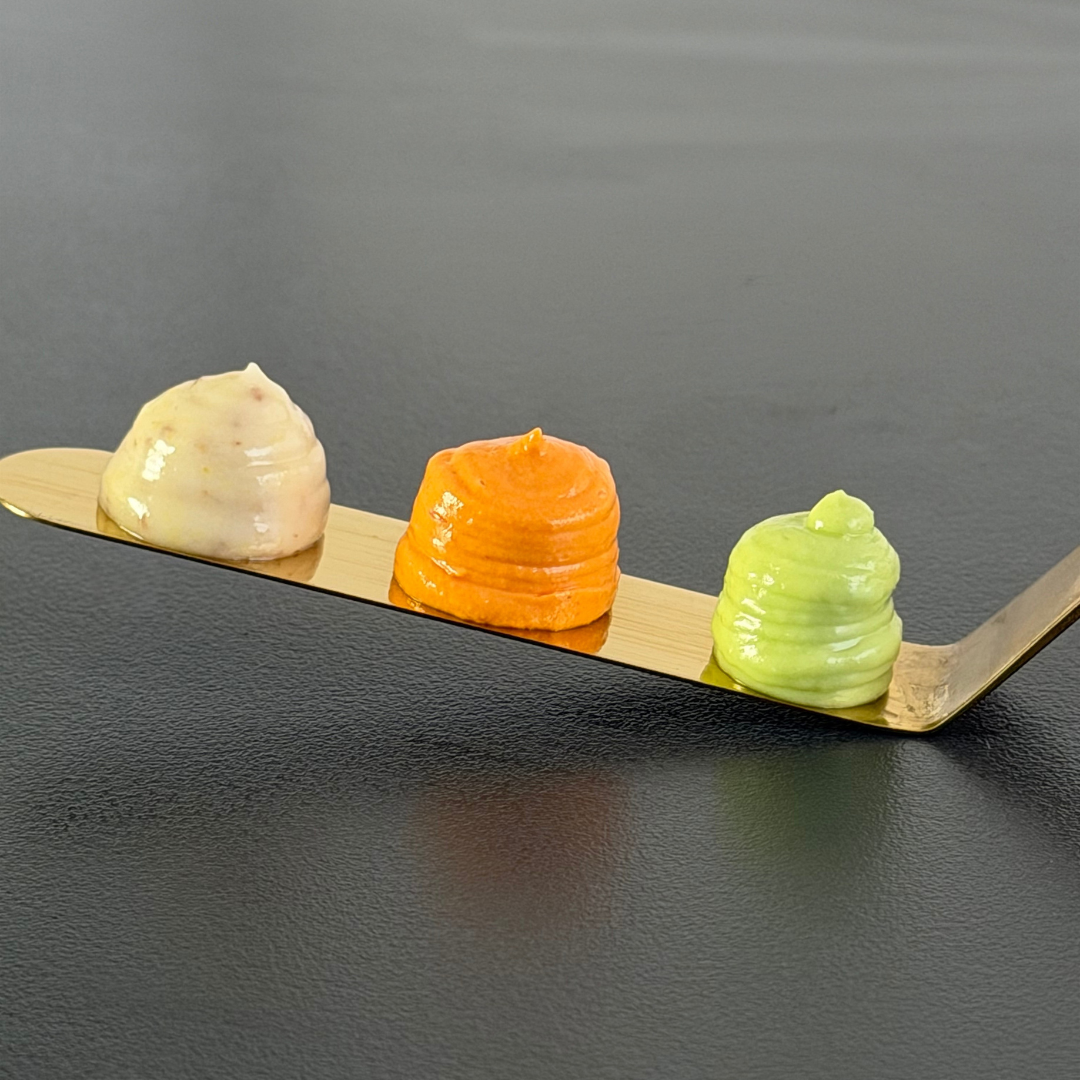
Some recipes do not need to be complicated to be extraordinary. The chive, garlic, and parsley mayonnaise by Carlos Maestre is exactly that: a sauce with classic roots and recognizable market ingredients, but executed with a technical precision that elevates it above any conventional mayonnaise. And the ingredient that makes it possible is Promayo, our latest innovation from Sosa Ingredients.
Carlos Maestre is one of those chefs who understands that technique is not at odds with simplicity. A regular collaborator with Sosa Ingredients, Maestre has demonstrated on several occasions that technical ingredients are not exclusive to haute cuisine: they are tools available to any professional who wants to improve their results with less effort and more consistency. This chive mayonnaise is a testament to that philosophy.
Promayo is our latest innovation in the field of emulsions. A plant-based base that allows for the creation of mayonnaises, emulsified sauces, and creamy dressings without the need for eggs, using a direct, clean, and reproducible process.
The choice of these three ingredients is no coincidence. They are three of the most common aromatic herbs in Spanish and Mediterranean cooking, with profiles that complement each other naturally:
Together, these three ingredients create a mayonnaise with a Mediterranean profile, fresh and versatile, which works as a sauce, a dressing, a dip, or as a plating base in restaurant kitchens.
This chive, garlic, and parsley mayonnaise is a multipurpose resource that can be integrated into a wide range of preparations:
As an accompanying sauce for grilled meats, baked fish, or roasted vegetables, where its herbaceous freshness provides contrast and brightness to the dish.
As a base for montaditos or toasts, spread generously and topped with seasonal ingredients: anchovies, ham, octopus, or pickled white anchovies.
As a salad dressing, slightly diluted with a little water or lemon juice to achieve a lighter, more fluid consistency.
As a dip for crudités, fries, tempura, or any fried preparation where creaminess and herbaceous character are welcome.
In restaurant kitchens, as a finishing element in contemporary plating where the green color and creamy texture provide visual elegance.
Because in the kitchen, the best innovations are the ones that go unnoticed. The ones that are there, working, allowing the chives, garlic, and parsley to be exactly what they should be.
There are combinations gastronomy doesn’t need to justify. Porcini and truffle is one of them. Both come from the same territory -the forest floor, the autumn humidity, the soil that surrounds them- and both share that deep, earthy, umami profile that has made them two of the most prized products in European cuisine. But they […]
The olive is much more than a fruit. It is culture, territory, and Mediterranean identity distilled into a single bite. From Greek olive groves to Andalusian oil mills, the olive has defined for millennia the way people cook, preserve and think about gastronomy across the entire Mediterranean arc. And if there is one ingredient that […]
Escabeche is one of the oldest and most deeply rooted culinary techniques in Spanish gastronomy. Its name comes from the Arabic iskebech, meaning “vinegar stew,” and was introduced to the Iberian Peninsula during the Arab occupation, originally as a food preservation method, particularly for fish. The first written appearance of the term in Castilian Spanish […]



 938 666 094
 sosa@sosa.cat