
 Salsus
LinkedIn
Salsus is a brand specialising in natural sauces and stocks, made with fresh ingredients and free from additives, guaranteeing quality and authentic flavour.
There are combinations gastronomy doesn’t need to justify. Porcini and truffle is one of them. Both come from the same territory -the forest floor, the autumn humidity, the soil that surrounds them- and both share that deep, earthy, umami profile that has made them two of the most prized products in European cuisine.
But they don’t repeat each other: they complete each other. Porcini brings body, meatiness and a nutty, damp-earth flavor that gives the bite structure. Truffle brings perfume: a volatile, intense, almost hypnotic aroma that can be perceived before you even taste it. Together they build an aromatic profile of a depth that’s hard to achieve with any other combination, which is why for decades they’ve held a privileged place in risottos, fresh pastas, creams, eggs and game meats.
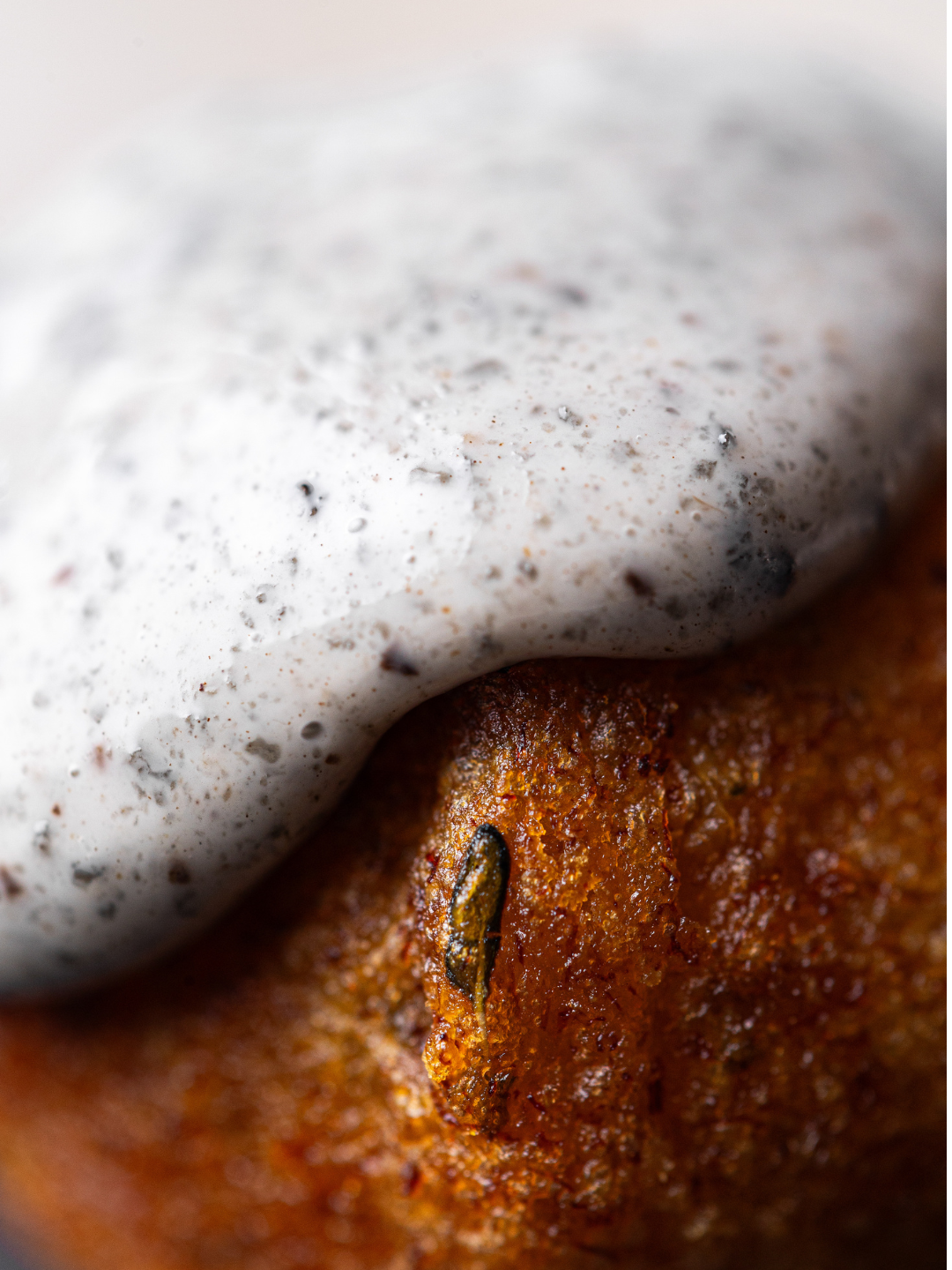
This Porcini and Truffle Mayo takes that classic pairing into an unexpected format: an egg-free, mayonnaise-style emulsion where all the flavor of the forest is concentrated into a creamy, versatile sauce.
The recipe was developed by SALSUS, a Norwegian-origin brand specializing in top-quality broths for avant-garde dining. Their approach starts from a premise we fully share: the foundation of a great dish is a great stock. Their broths provide that real, clean and deep concentration of flavor that the most demanding kitchens need as a starting point.
This recipe is part of Rupture, the recipe book we developed together with SALSUS. A project that brings together the flavor power of their broths with the technical precision of our ingredients, to explore preparations that break with the conventions of savory cooking.
Promayo is our plant-based emulsifying base, developed specifically for mayonnaise-style emulsions: sauces where a fat phase is stably integrated into a water phase, with that creamy, enveloping texture characteristic of classic mayonnaise.
In this recipe, its main virtue is neutrality. An egg yolk would contribute its own flavor and compete with two ingredients as delicate and complex in profile as Porcini and truffle. Promayo adds nothing that interferes: it lets the broth and the oil build the flavor without mediation. What comes through on the palate is forest, not mayonnaise.
Added to that neutrality are its technical advantages: a stable emulsion that doesn’t break or separate, a straightforward process with no temperature control or gradual oil incorporation required, and a reproducible result in every batch.
The Porcini and Truffle Mayo works in multiple service contexts: as an accompaniment to red meats and game, over sous-vide eggs, on tostas and appetizer bites, alongside roasted vegetables or as a finishing touch on a mushroom dish. Wherever depth, perfume and creaminess are called for, it finds its place.
An autumn-season classic, reinterpreted through emulsion and built on an exceptionally high-quality broth.
Some recipes do not need to be complicated to be extraordinary. The chive, garlic, and parsley mayonnaise by Carlos Maestre is exactly that: a sauce with classic roots and recognizable market ingredients, but executed with a technical precision that elevates it above any conventional mayonnaise. And the ingredient that makes it possible is Promayo, our […]

The olive is much more than a fruit. It is culture, territory, and Mediterranean identity distilled into a single bite. From Greek olive groves to Andalusian oil mills, the olive has defined for millennia the way people cook, preserve and think about gastronomy across the entire Mediterranean arc. And if there is one ingredient that […]

Escabeche is one of the oldest and most deeply rooted culinary techniques in Spanish gastronomy. Its name comes from the Arabic iskebech, meaning “vinegar stew,” and was introduced to the Iberian Peninsula during the Arab occupation, originally as a food preservation method, particularly for fish. The first written appearance of the term in Castilian Spanish […]



 938 666 094
 sosa@sosa.cat