
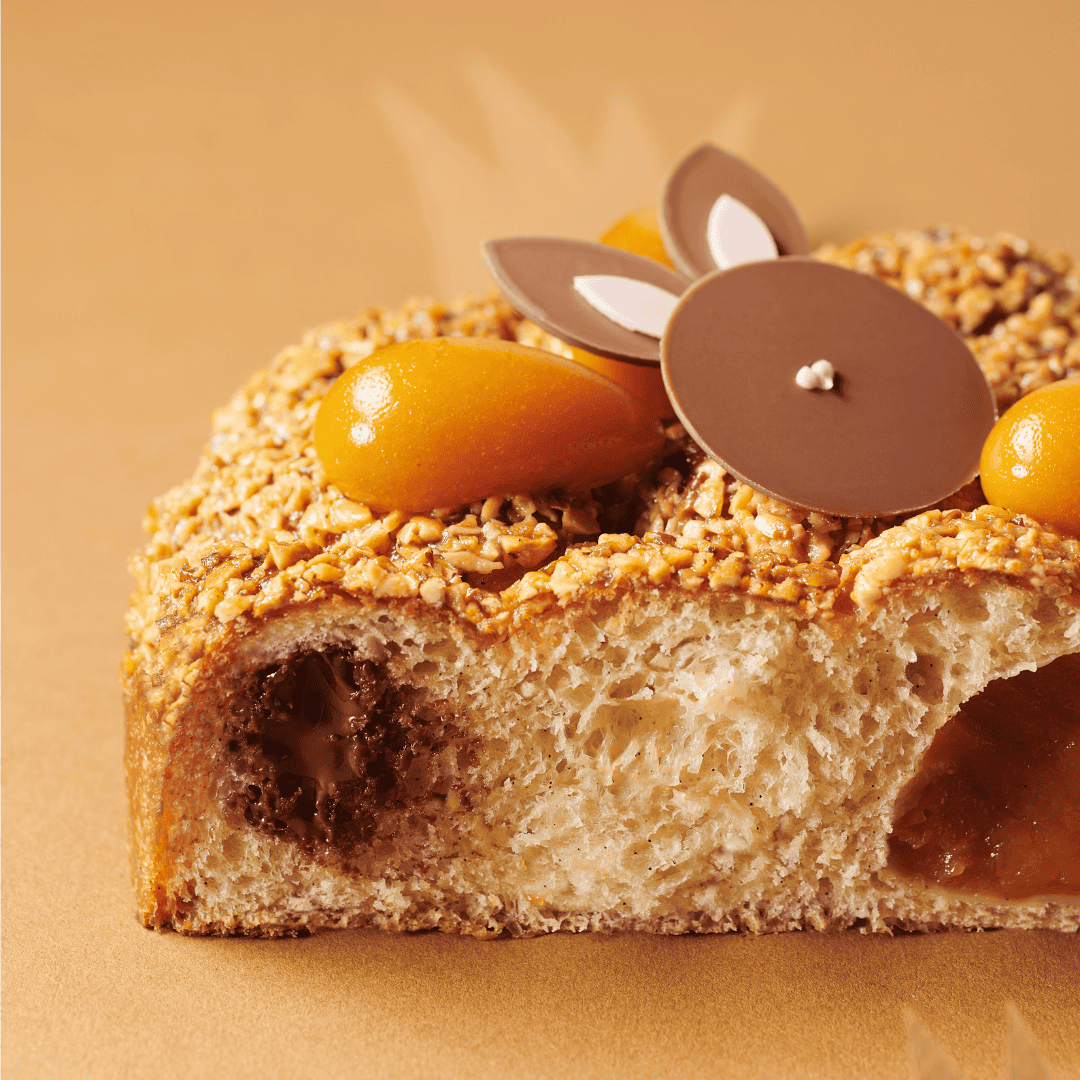
Some recipes are born from a special occasion and end up being much more than that. The Alballana Brioche is one of them. Created by Lorena Criollo, pastry chef and trainer at Valrhona, this brioche was conceived as a celebration of Easter 2026: a seasonal viennoiserie piece where technique and flavour merge in every layer, every slice, every bite.
Vanilla, toasted hazelnut, and apricot. A triad of flavors that becomes a statement of intent about what modern pastry is capable of when technique serves flavour.
The foundation of everything is the brioche itself. And a well-executed vanilla brioche is, in its own right, a masterpiece of balance: a tender, layered dough with that warm, deep fragrance that only quality vanilla can provide. It is the perfect starting point for an Easter piece that seeks to evoke warmth, celebration and memory.
One of the most distinctive elements of the Brioche Alballana is its hazelnut nougatine. Nougatine is a classic of French confectionery — a blend of caramel and nuts that, once spread and cooled, delivers that unmistakable, brilliant crunch so prized in high-end pastry.
But integrating nougatine into a pastry poses a significant technical challenge: ensuring that the mixture is evenly distributed, that it does not separate during baking, and that it maintains its structure without losing its identity.
The solution comes with NH Pectin
Pectine NH is a natural-origin gelling agent — derived from citrus peel — particularly valued in pastry for its ability to create firm, glossy and perfectly homogeneous gels in fruit and sugar-based preparations. Its key advantage lies in its thermoreversibility: it can be heated, set and reheated without losing its properties, making it a precision ally in preparations that will go through the oven.
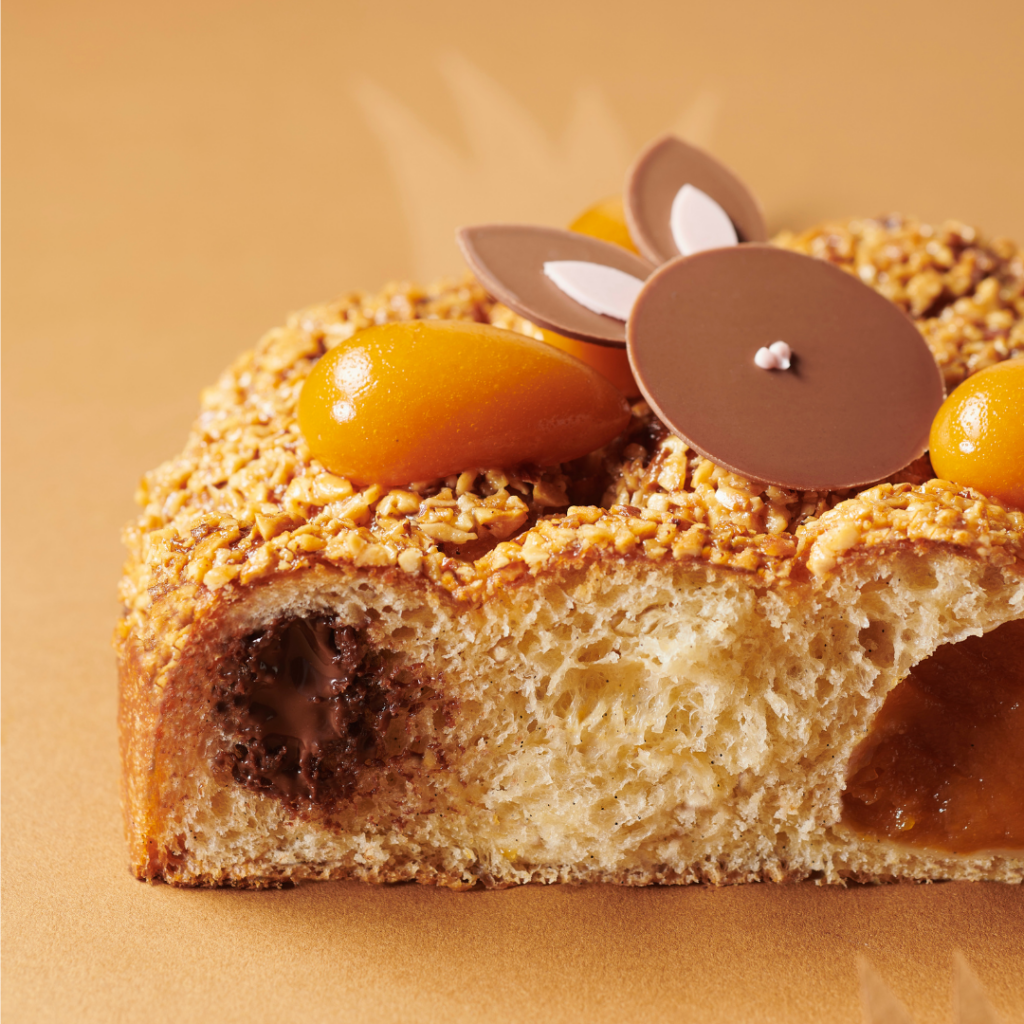
In this nougatine, NH Pectin acts as a binder: it ensures that the ingredients are perfectly integrated, that the mixture does not disintegrate during cooking and that the end result is a nougatine that maintains its shape, cohesion and characteristic crunch.
The apricot brings to the Brioche Alballana that acidic, fruity counterpoint that balances the richness of the vanilla and the toasted depth of the hazelnut. But incorporating a fruit filling into a piece that goes into the oven presents one of the greatest challenges in technical pastry: ensuring that the fruit retains its texture, its flavour and its presence under heat.
This is where Gellan Gum comes in, probably the most surprising texturizer for those who discover it for the first time. Gellan Gum is a plant-based gelling agent, with a texture similar to agar-agar but with one property that makes it unique in its category: it withstands baking temperatures without losing its gel structure. While most gelatines melt under heat, Gellan Gum maintains its firmness even inside the oven, making it possible to create bakeable fillings that preserve their shape, their moisture and the full intensity of the original flavour.
Some recipes do not need to be complicated to be extraordinary. The chive, garlic, and parsley mayonnaise by Carlos Maestre is exactly that: a sauce with classic roots and recognizable market ingredients, but executed with a technical precision that elevates it above any conventional mayonnaise. And the ingredient that makes it possible is Promayo, our […]

The olive is much more than a fruit. It is culture, territory, and Mediterranean identity distilled into a single bite. From Greek olive groves to Andalusian oil mills, the olive has defined for millennia the way people cook, preserve and think about gastronomy across the entire Mediterranean arc. And if there is one ingredient that […]

Escabeche is one of the oldest and most deeply rooted culinary techniques in Spanish gastronomy. Its name comes from the Arabic iskebech, meaning “vinegar stew,” and was introduced to the Iberian Peninsula during the Arab occupation, originally as a food preservation method, particularly for fish. The first written appearance of the term in Castilian Spanish […]



 938 666 094
 sosa@sosa.cat