
 Javier Sánchez
LinkedIn
Javier Sánchez
LinkedIn
Chef y creador de contenido gastronómico especializado en cocina fusión contemporánea, con más de 12 años de experiencia en Barcelona. Destaca por sus combinaciones creativas y el cuidado estético del emplatado, forma parte de Gronda, donde cuenta con gran alcance y miles de seguidores.
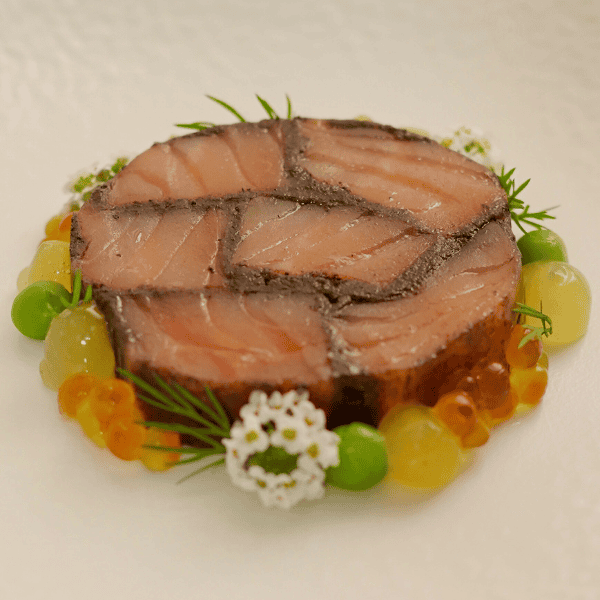
At Sosa Ingredients, we believe that technique is a form of expression, and this new recipe together with Chef Javier Sánchez demonstrates it masterfully. This is the third creation in a series of six that we are developing in collaboration throughout the year, designed especially for the HORECA channel and restaurant professionals.
In this proposal, aesthetics and technical precision come together thanks to the use of the mosaic technique. This method consists of arranging small solid elements (such as vegetables, meats or fruits) in an orderly (such as vegetables, meats or fruits) to form a visually harmonious, almost pictorial structure. It is a technique that requires precision in cutting, chromatic balance and a deep knowledge of the ingredients, both in taste and texture.
To achieve a solid structure, without renouncing the freshness and definition of the ingredients, we have used Gelbinder, a texturizer that acts as a cold binder. This ingredient This ingredient binds the components of the mosaic together without crumbling, even during cooking or handling processes.
The mosaic is accompanied by a citrus gel made with Gracila Gel, providing a fresh and bright note that balances the composition with acidity and a smooth texture, without losing definition on the plate.
The olive is much more than a fruit. It is culture, territory, and Mediterranean identity distilled into a single bite. From Greek olive groves to Andalusian oil mills, the olive has defined for millennia the way people cook, preserve and think about gastronomy across the entire Mediterranean arc. And if there is one ingredient that […]
Escabeche is one of the oldest and most deeply rooted culinary techniques in Spanish gastronomy. Its name comes from the Arabic iskebech, meaning “vinegar stew,” and was introduced to the Iberian Peninsula during the Arab occupation, originally as a food preservation method, particularly for fish. The first written appearance of the term in Castilian Spanish […]
On this occasion, Carlos Maestre reinterprets the traditional lasagna from a structural and striking perspective: instead of baking layers of pasta, he fries them after assembly. Instead of conventional pasta, he uses spinach crepes. And instead of a classic béchamel sauce made with roux, he incorporates Gelcrem Hot as a functional texturizer. The result is […]



 938 666 094
 sosa@sosa.cat