
 Javier Sánchez
Chef and gastronomic content creator specializing in contemporary fusion cuisine, with over 12 years of experience in Barcelona. Noted for his creative combinations and aesthetic attention to plating, he is a member of Gronda, where he has a wide reach and thousands of followers.
Escabeche is one of the oldest and most deeply rooted culinary techniques in Spanish gastronomy. Its name comes from the Arabic iskebech, meaning “vinegar stew,” and was introduced to the Iberian Peninsula during the Arab occupation, originally as a food preservation method, particularly for fish. The first written appearance of the term in Castilian Spanish dates to 1525, in Ruperto de Nola’s Libro de los Guisados, although its earliest known mention is believed to come from the Catalan Llibre de Sent Soví, dating to 1324.
Centuries later, escabeche remains a pillar of Spanish cuisine. Today it is typically served as an appetizer or tapa in bars and restaurants, present across all regions of the country with their own variations: from Galician pickled mussels to Castilian-style rabbit, Manchegan partridge, or Andalusian sardines.
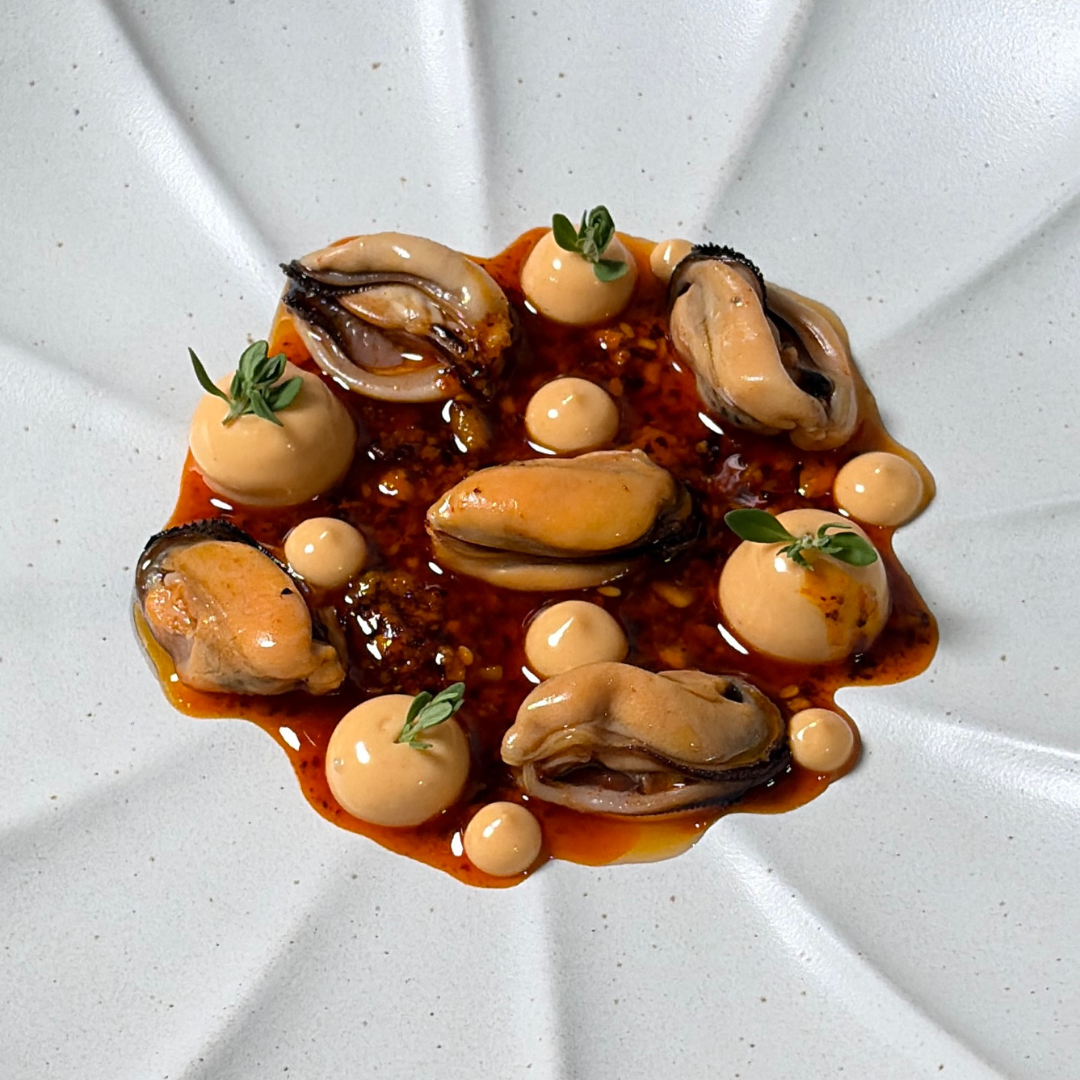
This recipe for Mussel Escabeche Mayonnaise, created by our collaborator Javier Sánchez, is one such expression. A proposal that takes the soul of classic escabeche—the vinegar, the spices, the marine flavor—and transforms it into a creamy, intense, and completely innovative sauce thanks to the use of Promayo, our technical ingredient that redefines emulsion in modern cuisine.
The versatility of this Pickled Mussel Mayonnaise makes it an extraordinary resource in both restaurant and product-focused kitchens. Some suggestions:
As a dipping sauce: perfect alongside grilled seafood, octopus, prawns or scallops, where the marine depth of the mayonnaise reinforces the main ingredient’s profile.
On toast or canapé: spread on toasted bread with a fresh mussel on top and a few drops of lemon. A high-impact appetizer that combines texture, acidity and marine flavor in a single bite.
As a tartare base: mixed into tuna, bonito or salmon tartare, replacing conventional mayonnaise and adding an extra dimension of flavor.
In fine dining plating: quenelled or piped, as a finishing element in fish and seafood dishes where creaminess and character are key.
In gourmet sandwiches: as an alternative to aioli or conventional mayonnaise in seafood sandwiches, fried fish rolls or anchovy-topped montaditos.
The mussel escabeche that forms part of this recipe can also be served independently as a tapa, starter or part of a charcuterie and conserve board, showcasing the dual utility of this preparation.
Some recipes do not need to be complicated to be extraordinary. The chive, garlic, and parsley mayonnaise by Carlos Maestre is exactly that: a sauce with classic roots and recognizable market ingredients, but executed with a technical precision that elevates it above any conventional mayonnaise. And the ingredient that makes it possible is Promayo, our […]

The olive is much more than a fruit. It is culture, territory, and Mediterranean identity distilled into a single bite. From Greek olive groves to Andalusian oil mills, the olive has defined for millennia the way people cook, preserve and think about gastronomy across the entire Mediterranean arc. And if there is one ingredient that […]

Can you make an egg-free mayonnaise? Yes, you can — and the result can be just as stable, creamy and versatile as a traditional mayonnaise. The key lies in replacing the technical function of egg — its emulsifying capacity — with a system of 100% plant-based ingredients capable of binding water and oil with the […]


 938 666 094
 sosa@sosa.cat