
Working with different textures in pastry gives us the opportunity to create preparations that provide unique sensations to diners. To achieve this goal, we need to know what the main ones are and how we can achieve them.
Why are Textures Important in Pastry?
Texture in any pastry preparation takes on special relevance when tasting them, as it becomes a basic element to offer a comprehensive gastronomic experience. Thus, for example, obtaining contrasts, such as the union of crunchy or liquid elements in the same recipe, makes the diner enjoy it much more. It even helps them perceive its different flavors in a much less traditional way.
Therefore, it is worth considering techniques such as gelification. By carrying it out on a specific product, we ensure that its flavor remains on the palate for longer.
The 4 Textures of Pastry Preparations
If we apply the appropriate texturizing products, we will achieve:
- Gelatinous textures: they are very varied and adapt to all types of preparations. Among them, the soft, hard or more elastic ones.
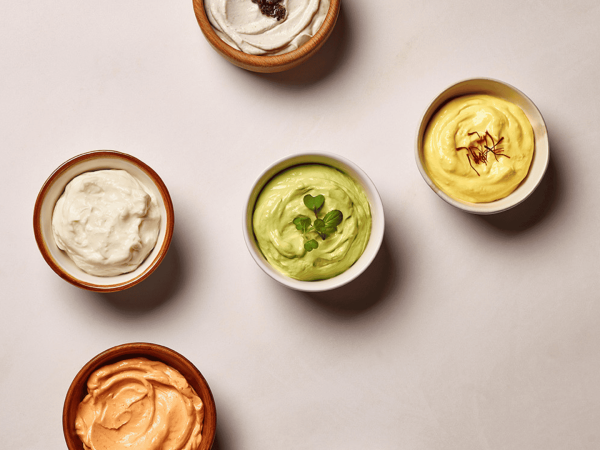
- Creamy textures: they give thickness and creaminess to liquids of all kinds. They are obtained by including dietary fibers, stabilizers and thickeners in the recipe, cold or hot, depending on the chosen product.
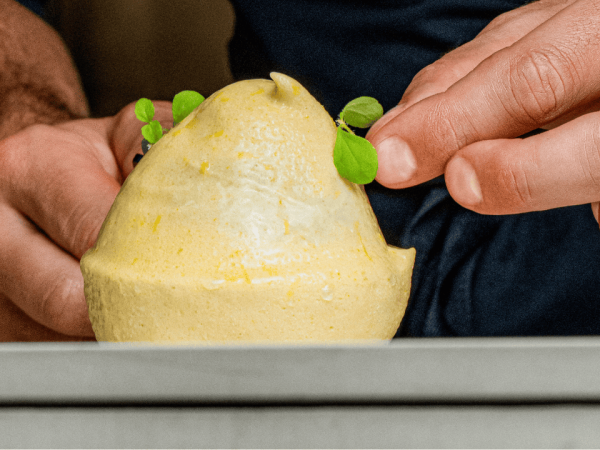
- Airy and spongy: these are textures that are achieved by including air inside the sweet or edible in general. One of the most common examples is mousse. Discover more about these textures here.
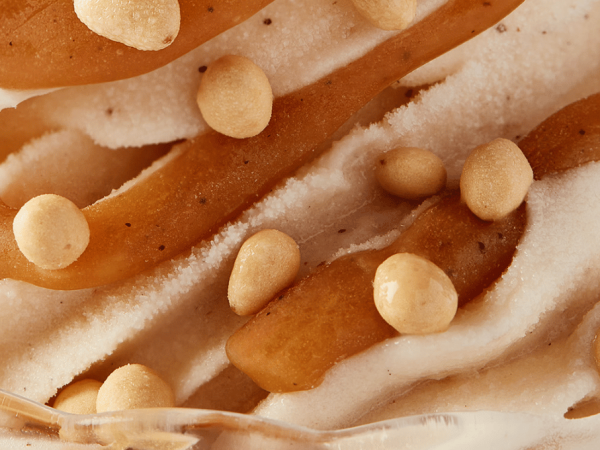
- Crunchy: they are dry to the palate, because they have almost no water. They can be achieved with specific ingredients or with the use of texturizers. Chocolates are one of the pastry recipes that can have this texture.
How to Achieve Different Textures?
If we want to achieve the different types of textures in pastry that exist, we can use various products of vegetable and animal origin. All of them are designed to comply with a specific preparation technique and replace traditional ingredients, such as egg or sugar. In this way, the recipes are more attractive in the mouth, but also healthier in many cases.
Crunchy Textures
When it comes to providing this sensation, we can opt for one of the following ingredients:
- Crispy and Crispy wet proof: They are made with freeze-dried fruit juices. In this way, crunchy and very tasty pieces are obtained, which do not lose their texture.
- Peta crispy: They are small pieces of sugar filled with a bubbling gas. In addition, they have a flavored coating. They work well as a filling or topping for various preparations.
- Whole freeze-dried fruits and vegetables: They provide a lot of flavor.
- Caramelized nuts and seeds: They are very powerful and have a sweetness that is not excessive.
Airy and Spongy Textures
The list of elements that help us achieve airy and spongy textures includes:
- Albuwhip: Egg white powder. Its main function is to whip an aqueous liquid without the egg white. It offers stability in the texture, more air retention capacity and stands out because it allows introducing flavored liquids to any preparation.
- Potatowhip: It is potato protein presented in powder format and without any odor. Therefore, it is applied without problems in vegetarian and vegan recipes instead of the traditional egg. It prepares non-fatty liquids and is aerating, emulsifying and coagulating.
To learn more about aerated textures you may be interested in: What is aeration? Discover how to make aerated textures.
Creamy Textures
To achieve this type of texture in pastry, we can opt for thickening products or dietary fiber:
- Gelcrem frío: It is a thickener that is made with potato starch and has a very simple application. When added to a liquid, it provides a transparent, shiny result with a smooth texture. On the other hand, it does not present problems if it is mixed with acidic ingredients.
- Inulina en caliente: It is a dietary fiber that comes from roots and tubers. It provides a sensation of creaminess, so it allows replacing fatty elements in any type of pastry recipes. For example, baked doughs or ice cream.
- Inulina en frío: Like the previous one, it is an ingredient that comes from roots and tubers. It provides a creamy texture without having to incorporate fats or sugars to sweet preparations of all kinds, such as creams or meringues. It is also worth highlighting its slight sweetness. Its main application is in liquids and in cold. We must mix it by shaking vigorously if we want to obtain the best results.
Gelatinous Textures
To achieve textures that are gelatinous, we can opt for the following components:
- Gelifying agents of animal origin: They provide stability. They are proteins that resist freezing well and do not need the application of heat to hydrate.
- Gelifying agents of vegetable origin: They are made from different carbohydrates. They allow us to achieve different textures and resist high temperatures.
The following products belong to these categories:
- Instangel: It is an instant and soft gelatin of animal origin. It is activated by the cold.
- Goma gellan: A gelling agent from bacterial fermentation that does not change if subjected to high temperatures. This means that it is very useful to use as a filling for bakeable doughs. It is transparent and has the advantage that it gels acidic liquids.
- Agar-agar: It is extracted from red algae and has a great gelling power. In addition, it is slow gelling and resistant to high temperatures. It provides a particularly firm texture.
- Vegetable gelling agent: Fast gelling and suitable for liquid products with alcohol content. It stands out for offering a firm texture and great elasticity.
- Vegan mousse gelatine: It is an ingredient that arises from mixing agar-agar with starch from tapioca. Therefore, it is vegan, although it has the same characteristics as gelatin of animal origin in the preparation of a mousse. Its use results in a resistant, clean and pleasant gelatin to the palate.
In short, textures in pastry are a challenge that we must assume if we want to achieve excellence in this type of preparation. Knowing its basic characteristics is essential for anyone who wants to be a professional in this sector. If you want to know more about this topic, do not hesitate to contact us to achieve the training you need.



 938 666 094
 sosa@sosa.cat