
Egg-free mayonnaise has evolved from being an alternative to becoming a category with its own identity within professional sauce-making. The demand for plant-based options, food safety requirements, and the pursuit of greater creative control in the kitchen have led chefs, R&D teams, and HORECA operators to rethink a sauce that seemed closed for decades.
At Sosa Ingredients, we understand that reformulating such an iconic emulsion requires technical rigor, which is why we want to share how to approach the preparation of egg-free mayonnaise with professional criteria, maintaining texture, stability, and creative freedom.
What is egg-free mayonnaise from a technical standpoint?
Mayonnaise is essentially a stable oil-in-water emulsion, in which the egg (specifically the lecithin in the yolk) acts as a natural emulsifier. It is this component that allows fat droplets to remain suspended in an aqueous phase without separating, creating that characteristic creamy, smooth texture.
When we remove the egg, we also remove the emulsifier. Therefore, egg-free mayonnaise is not simply a matter of “removing and that’s it,” but rather replacing the technical function of the egg with another emulsifying system capable of guaranteeing the same rheological behavior: stability, creaminess, fat incorporation capacity, and service resistance.
The most common approaches to achieve this in professional kitchens are:
- Plant proteins (soy, pea, potato): provide emulsifying capacity and, in some cases, aerating properties.
- Modified starches: act as thickeners and provide body, but do not emulsify on their own.
- Hydrocolloids (xanthan gum, guar gum): stabilize the aqueous phase, although they often require additives for a clean label.
- Functional fibers such as alpha-cyclodextrin: plant-based emulsifier with high technical performance and compatible with clean labeling.
The choice of one system or another determines the final result in both texture and label profile.
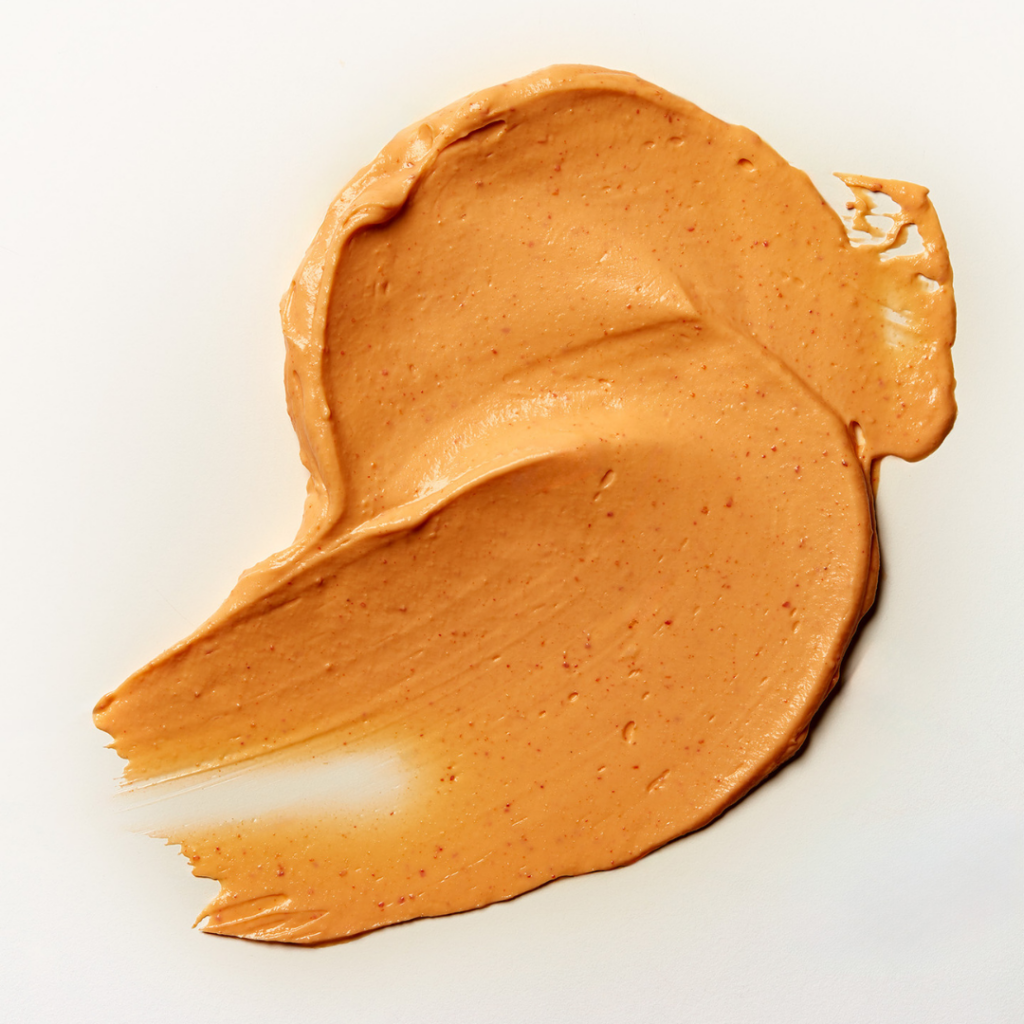
Why are so many kitchens looking for alternatives to eggs?
Beyond the vegan trend, there are operational and technical reasons that explain the growing interest in egg-free mayonnaise:
- Food safety: raw or minimally processed eggs are one of the main vectors of salmonellosis. Eliminating them simplifies temperature control and reduces risk in delivery services, catering, and outdoor events.
- Allergies and intolerances: eggs are among the fourteen allergens requiring mandatory declaration in the EU. An egg-free sauce expands the potential audience without the need to duplicate preparations.
- Lifestyle and diet: demand for vegan, plant-based, and flexitarian products continues to grow in the European HORECA channel, especially in chains and dark kitchens.
- Stability and shelf life: well-formulated egg-free emulsions are more stable over time and less sensitive to thermal variations.
How to make egg-free mayonnaise in professional kitchens?
There are several methods for making egg-free mayonnaise. The choice will depend on production volume, the desired level of recipe control, and the establishment’s gastronomic positioning.
Mayonnaise with plant-based milk and oil
This is one of the most widespread options in home and bistronomic cooking. Soy milk (rich in lecithin) or almond milk is emulsified with vegetable oil, vinegar, and salt, using an immersion blender.
- Advantages: accessible ingredients, clean profile.
- Limitations: stability dependent on the type of plant milk, lighter texture, noticeable soy flavor. Not always suitable for high-volume services.
Mayonnaise with aquafaba
The cooking liquid from chickpeas contains proteins and saponins that allow emulsification and aeration.
- Advantages: upcycling solution, plant-based claim.
- Limitations: batch-to-batch variability, residual legume flavor, low scalability for regular professional use.
Packaged Industrial Vegan Mayonnaise
Ready-to-use finished products.
- Advantages: speed, uniformity.
- Limitations: closed recipe, no room for customization, extensive ingredient lists with additives, bulky formats that take up refrigerated space, and significantly higher prices per kilo.
Mayonnaise with functional powder mix
This approach best combines technical control, clean labeling, and creative freedom. A well-formulated powder mix provides the complete emulsifying system, and the chef adds the water, oil, and acids as desired. This is the approach we have developed with Promayo.
Promayo: our solution for creating egg-free mayo-style textures
Promayo is a clean-label powder mix that, when hydrated with water and emulsified with oil, produces a mayo-style texture that is stable, creamy, and fully customizable. Its formulation is based on three functional ingredients:
- Starch fiber (alpha-cyclodextrin): acts as a natural plant-based emulsifier. It is responsible for binding the fat phase and the aqueous phase without the need for eggs or additives.
- Potato protein: provides whipping and aerating capacity, contributing to the body and lightness of the sauce.
- Corn starch: complements the texture by providing creaminess and smoothness.
The result is an egg-free emulsion, dairy-free, gluten-free, and soy-free, with plant-based and vegan claims, ready to become the neutral base on which the chef builds their own sauce.
Technical and operational advantages of working with egg-free mayonnaise in powder
Beyond the plated result, preparation from a powder mix provides clear benefits for professional operations:
- Zero waste: the chef reconstitutes exactly the amount needed for each service, avoiding the usual losses from opened buckets of industrial mayonnaise, whose shelf life after opening is typically between six and twelve weeks.
- Storage savings: 1 kg of Promayo is equivalent to approximately 32 kg of finished mayonnaise. Less refrigerated space, lower energy consumption, and simplified logistics, especially useful in dark kitchens, catering, and multi-site operators.
- Food safety: by not containing eggs, the risk of salmonella is eliminated and strict temperature controls during service are relaxed.
- Complete recipe flexibility: the chef decides on the oil (sunflower, extra virgin olive oil, seeds), adjusts the water/oil ratio to modify texture, and incorporates aromatics such as truffle, paprika, roasted garlic, miso, herbs, or spices.
- Clean label and differentiating claims: vegan, plant-based, egg-free, lactose-free, gluten-free, soy-free. Relevant arguments for both menu and communication.
- Superior perceived value: a “homemade” sauce prepared on the spot is communicated to the end customer as a differentiating product compared to industrial mayonnaise served directly from the bucket.
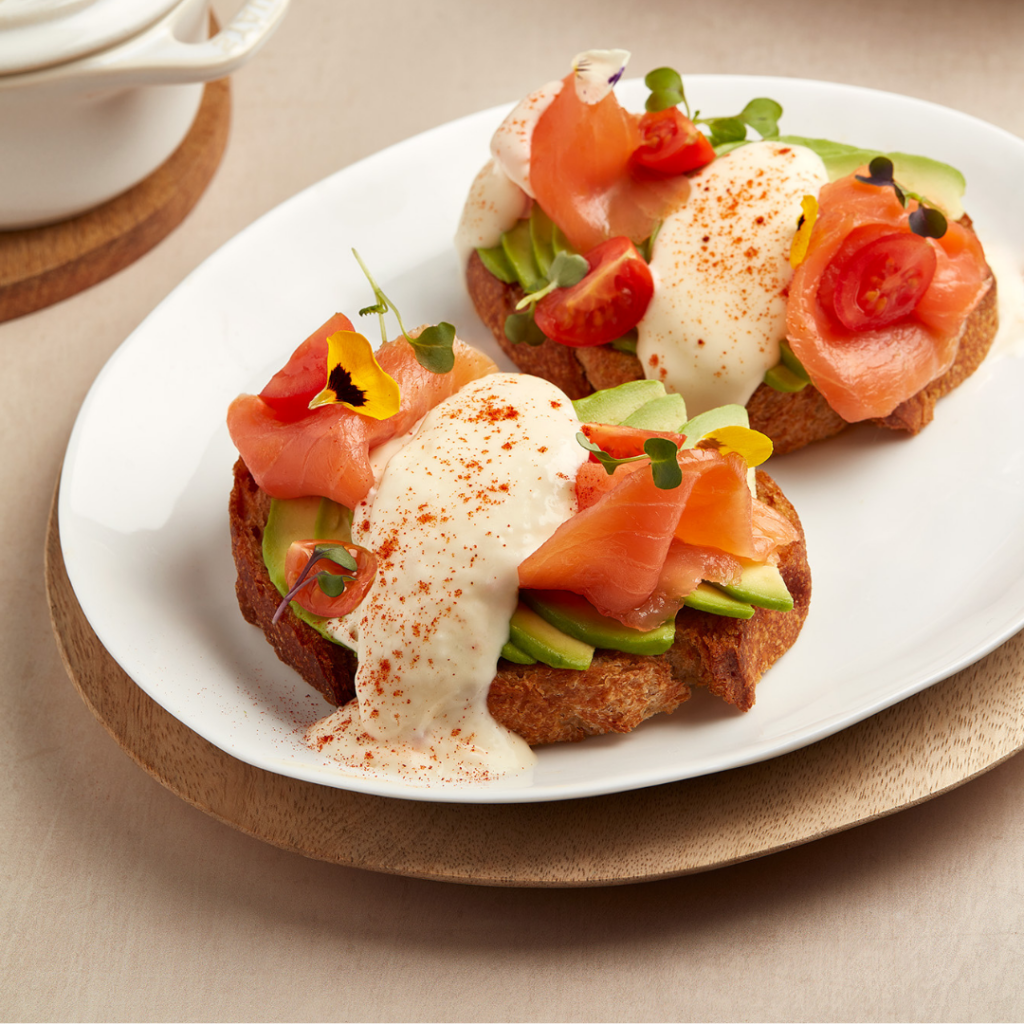
Applications in cooking and savoury pastries
A well-formulated egg-free mayonnaise opens up a very wide range of applications:
- Flavored vegetable mayonnaise: black truffle, smoked paprika, citrus, fresh herbs.
- Cold sauces for plating: neutral bases to accompany fish, seafood, grilled vegetables, or crudités.
- Egg-free aioli: with confit garlic and extra virgin olive oil.
- Emulsified textures for snacks and appetizers: dips, spreads, sauces for corn dogs, tempura, and fried foods.
- Adaptations of classics: Russian salad, veganized stuffed eggs, gourmet sandwiches.
Working the category from a controlled technical base allows the chef to build a sauce menu with its own identity, moving away from the uniformity of industrial mayonnaise and providing a real gastronomic argument to the end customer.
Egg-free mayonnaise is no longer a concession to a specific diet: it is a technical tool that expands the language of professional sauce-making. With the right system and ingredients, the chef regains control over the recipe, gains operational safety, and builds a differentiating proposition. That is the interpretation we make at Sosa Ingredients when we talk about reformulating a classic: it is not about imitating, but about reimagining gastronomy through the functionality of each ingredient.




 938 666 094
 sosa@sosa.cat