METILGEL

Format: 300g
Code 41395
Standard code 38818
Packaging 6u
Methylgel is powdered methylcellulose, a derivative of plant-based cellulose that gels with heat and acts as a thickener, emulsifier, and gelling agent in modern culinary applications.
Mode of use
Hydrate in cold water, let stand until the mixture reaches 4ºC, and apply heat. Dosage: Aerating effect: 15 g/L (hot or cold) / Thickening effect: 20 g/L (cold) Gelling effect: 20 g/L (hot >60ºC) / Binding effect: 30 g/L (hot >60ºC)
Dosage
20g/L
thickener: methylcellulose (e461)
The viscosity of methylcelluloses can vary greatly, which affects the final gelling result.
Features
It gels when heated and becomes liquid when cooled.

Metilgel is a texturising agent whose main feature is its ability to gel when heat is applied, offering unique properties compared to other traditional gelling agents. To achieve proper hydration, it should be mixed at room temperature with an electric mixer and then left to rest in a cool place until it reaches a temperature of between 3 y 4ºC

At this point, the preparation appears as a translucent liquid which, when subjected to temperatures above approximately 60ºC, transforms into a firm gelatin. As this gelatin cools, it gradually loses its hardness. If heat is not applied, the product acts solely as a thickener.

Metilgel is widely used in the food industry as a binding agent, especially in the production of products such as croquettes, where it allows for egg-free batter that is highly resistant to breaking during frying. In catering, its versatility makes it a key ingredient as an emulsifier, gelling agent and aerator, making it ideal for making hot foams, false meringues, terrines or hot jellies.
Resistance to freezing

High

Hydration

Hot and cold

Temperature resistance

Thermo-reversible

Application medium

Liquids

Elaborations
Possible
Elaborations
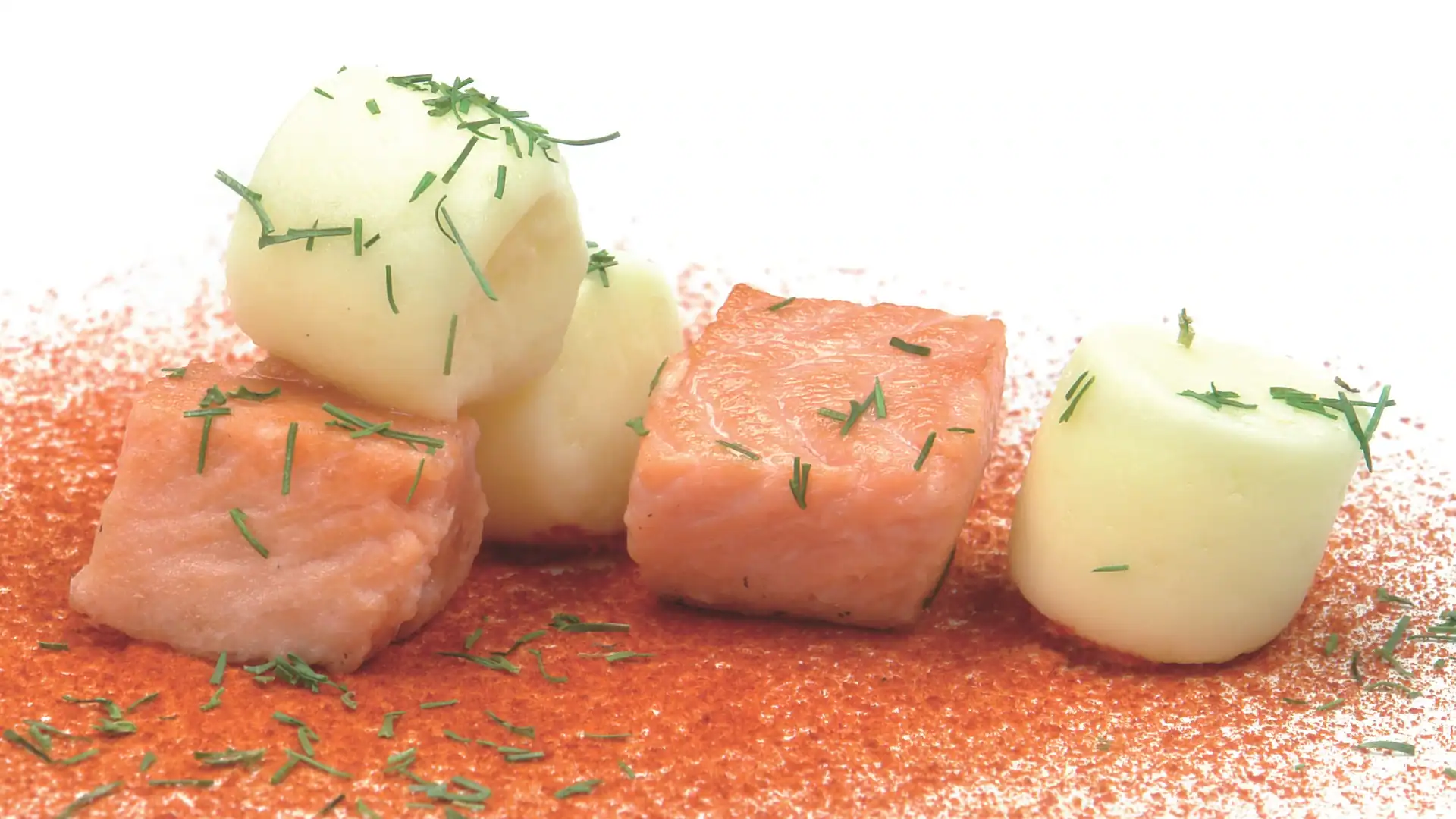
Metilgel allows for the development of preparations where temperature control is key, such as hot jellies and terrines that maintain their structure when served, as well as light and stable hot foams. It is also ideal for technical batter, especially in croquettes or other fried foods, where it acts as a vegetable binder, creating resistant, uniform coatings that do not break during frying.

Frequently Asked Questions

Why does Metilgel gel when heated and liquefy when cooled?
Methylcellulose (metilgel) has an inverse property to traditional gelling agents. It dissolves in cold water and forms a gel when heated, which may surprise chefs unfamiliar with this behavior.
How should I mix the methylcellulose to avoid lumps?
Metilgel should be mixed with cold water or cold liquids, preferably using a whisk or blender, to avoid the formation of lumps. Once mixed, it can be heated to activate its gelling.
How can I prevent Metilgel from affecting the taste of my preparations?
Although tasteless, some chefs notice a slight mouthfeel if used in excess. The key is to use the minimum effective amount and to test the recipe to ensure that the texture is adequate without altering the flavor.
Does Methylgel affect the cooking time of preparations?
In frying or baking, the firm layer created by methyl cellulose can help speed up the cooking of the interior by keeping the heat inside the food. This is especially useful for creating crispy exteriors with juicy interiors.
Can I combine Metilgel with other gelling or thickening agents?
Yes, it is compatible with many other hydrocolloids such as agar-agar or guar gum, allowing chefs to experiment with more complex or customized textures.
Products
Products