
In the high gastronomy and professional pastry sector, the texture of a preparation plays a fundamental role in the sensory experience. Among the fundamental technical ingredients to achieve textures, whipping proteins stand out, key elements to create foams, mousses, meringues and other preparations where stability and aeration are essential.
What are Whipping Proteins?
Whipping proteins are those that have the ability to form and stabilize aerated structures or foams when air is incorporated. These proteins act by reducing the surface tension of water, allowing air to be trapped in the form of bubbles and remain stable for a prolonged period.
They allow creating light, homogeneous textures with a great capacity for air retention, offering stable and uniform results.
They are essential in applications such as the preparation of mousses, meringues, fluffy cakes and other preparations that require lightness and aeration; which makes them indispensable in cooking and professional pastry.

What are Proteins and why are They Dynamic?
Proteins are formed by long chains of amino acids that fold into three-dimensional structures. Depending on the conditions of the environment, such as temperature, acidity or agitation, these chains can adopt different forms and behave in varied ways. For example, when high temperatures are applied, proteins can participate in the Maillard reaction, a process that generates characteristic flavors and colors (browning).
This dynamic nature allows proteins to be versatile in the creation of textures. In gastronomic preparations, their ability to denature and restructure is key to obtaining results such as foams, gels or even spongy masses.
Examples of Common Whipping Proteins:
- Egg white: Rich in albumin, a protein especially effective in generating and stabilizing foams (Albuwhip)
- Vegetable proteins: Such as potato (e.g. Potatowhip Cold), soy or aquafaba (Sojawhip) widely used in vegan cuisine.
- Milk casein: Useful in whipped creams or milk foams.
- Hydrolyzed proteins: Designed to improve whipping capacity and stability.
Advantages and Applications of Whipping Proteins
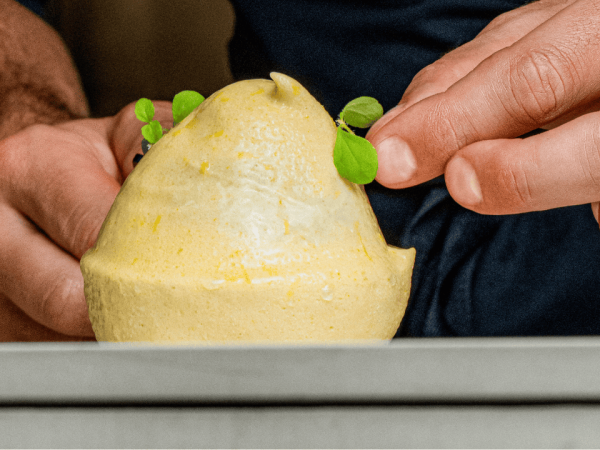
- Aeration and volume: increase the volume of preparations by introducing air, ideal for meringues, mousses and soufflés.
- Stability: maintain the structure of the preparations over time, even in freezing or thawing conditions.
- Versatility: they are compatible with a wide variety of liquids, from fruit purees to defatted broths.
- Vegan options: ingredients such as Sojawhip and Potatowhip allow creating preparations without ingredients of animal origin.
The Texturizing Wheel in Gastronomy and Whipping Proteins
Within the Texturizing Wheel in Gastronomy, the whipping proteins occupy a prominent place. This visual tool classifies texturizers into categories according to their properties, making it easier for chefs to select the ideal product for each preparation.
The whipping proteins are represented as solutions to achieve aerated, stable and homogeneous textures, being an essential guide for professionals seeking technical precision.

How to Integrate Them into your Preparations?
- Albuwhip: ideal for classic recipes with egg, such as meringues and whipped masses, providing 25% more whipping capacity than fresh egg white.
- Sojawhip or Potatowhip Cold: vegan alternatives with great air retention capacity, perfect for mousses and vegetable meringues.
- Potatowhip: potato protein that combines aeration, emulsion and coagulation, ideal for cakes and soufflés.
The whipping proteins are essential to achieve excellence in cooking and professional pastry. Its versatility and technical capacity not only solve everyday problems, but also open a range of creative possibilities. Discover how these ingredients can transform your preparations by downloading the texturizing wheel and experiment with the solutions we offer to innovate in your preparations.
Do you want to explore more about whipping proteins?





 938 666 094
 sosa@sosa.cat